Sunday, April 23, 2006

At the duck race


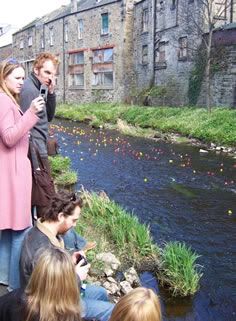
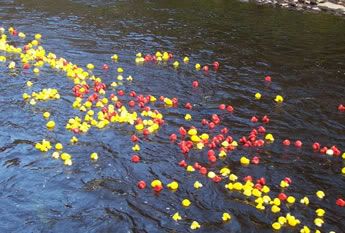
The annual charity duck race along the Water of Leith in Stockbridge is Edinburgh's version of the Boat Race - only instead of oversized sweaty Canadians, you watch hundreds of plastic ducks floating down the river.


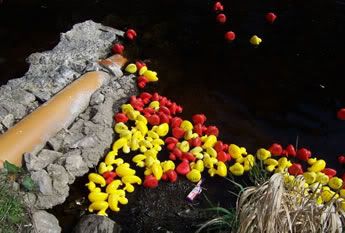
First run in 1988, it raises money for Cancer Research charities - you pay £1 and get a numbered duck. I picked number 1438, named him 'Quacker', and hoped for the best. As you can see, picking your duck out of the pack is a bit tricky.


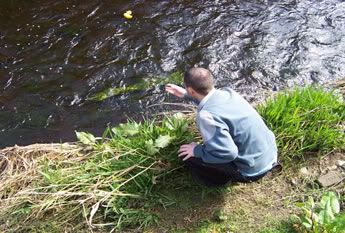
Some people resorted to any method to win. Those people know who they are - and although they may have a clear conscience, history will judge them. That's all I have to say on the matter. Oh - that, and the fact that Grant was helping someone else's duck here, so he's probably a hero.


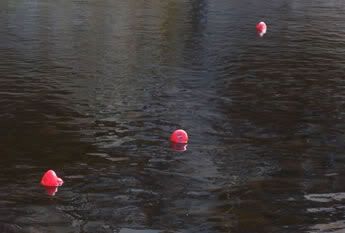
Half of the ducks were red, and half yellow - but for some strange reason the yellow ones were much faster. Months of aerodynamic work in the wind tunnel by the red duck engineers wasted, then. I wasn't sure, but I'm betting mine was probably red.


At a guess there were about 100 people following the race, which went over a course about 200m from the Deanhaugh Bridge to the cricket ground bridge. There were a few bemused tourists caught up in the excitement too - these crazy British, eh?


There were many fallers at 'The Pipe'.


At the end of the course the stewards pulled out the lucky winners and shouted the numbers out for the judge to write down. Winners are notified by post - so none of us knows if we won anything. Imagine if all the Grand National jockeys wore the same colour and the winning trainer found out a week later...


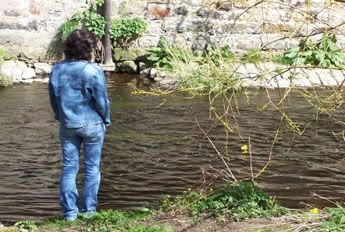
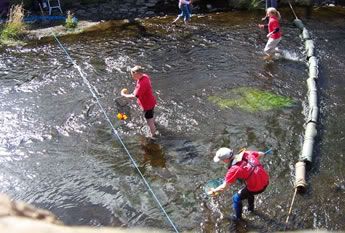
This one didn't win, caught in a slow-moving eddy. After the race the volunteers had to wade upstream picking up all the runners that never made it, caught on rocks and weeds en route. But the ducks love it, it's their one day in the spotlight.


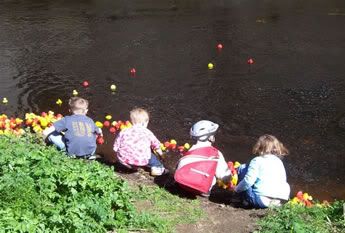
Of course, there was no shortage of helpers to lend a hand in the cleanup. I heard one woman point to a real-life duck (I have no idea what they made of it) and tell her daughter 'Look! There's the referee!'

Tuesday, April 18, 2006

You clever people...

Some scenery, last year


'Never underestimate your audience' is an old saying, and so for what is my 200th post on DUaB I thought I'd turn the tables and write something mildly puke-inducing about you lovely readers. In times gone by, diaries were something intensely private and to be protected - but these days any fool with a computer can knock something out and force themselves on the public, pretending to be a literary wit (works for me). And if you put pretty photos up, so much the better.

It goes without saying I appreciate everyone who reads and comments on here - and is one of the reasons I keep track of you all so closely (kudos to the visitor who found me by searching for 'funeral indoor eternal flame'. Apparently the link was a post I wrote about the war memorial under the Arc de Triomphe - which is maybe slightly out of their price range). But I'm sure you weren't aware that in visiting DUaB, you are proving yourselves to be in the top echelon of society? Yes - even you with the Pringles. When the A-Team invented the internet in the early 1990's, obscurity meant relatively few people had access to or understood it. Today however almost everybody has access to the internet, and even fewer people understand it. I know I don't.

But whereas in previous times people online weren't exactly at the forefront of society (apart from in the technological sense), it has now all changed. In a classic episode of The Simpsons - the one where Bart and Lisa start a kids' revolt against their annoying parents - when Lisa suggests they air their grievances on the internet, Bart says no - "We have to reach people who's opinions actually matter". Not any more. Ironically, their choice of medium - radio - seems recently to have rejuevated, and only because of the internet (online radio, podcasting etc).

But before this post sounds any more like a Media Studies essay, I point you to an article on today's Guardian website (Link), the headline of which is 'Ignore bloggers at your peril, say researchers'. A Technology company found Bloggers are exerting a "disproportionately large influence" on society, and are "increasingly dominating public conversations and creating business trends". Like Butter pies, for instance.

The author of the report - entitled 'An Army of Davids', went on to say "Bloggers and blog-readers are 'influentials' - the minority that pays attention to events outside of political and news cycles. They also tend on average to be better off, better educated and, more importantly, employed." So put down those Jaffa Cakes and pat yourself on the back, especially if you're reading this at work.

There are now more than 35m blogs around the world. 35 million. As the BBC notes - 'while most bloggers only write for small audiences, [I prefer 'exclusive'] 'they can sometimes achieve wider fame or become the focus of consumer campaigns'. A good case in point is the story of the Million Dollar Homepage, or more recently Kyle MacDonald's trading blog. MacDonald is a 26yr-old Canadian who found a large red paper clip, and offered it online in a trade for something else - with a view to eventually trading up enough to get a house. Well within a year, he managed it.

So it seems that if you have a computer and an idea, you can combine the two and make something serious happen. Or like me, you can simply waffle on about places you've been, pies, and Irn-Bru. And post pretty pictures. But then that's why you come back, right?

Friday, April 14, 2006

Halfway Back

1yr ago today...


Exactly a year ago I wrote this post in a Korean-run Internet gaming centre in Sydney. At the time I was wondering if my time abroad would seem to have gone by quickly when I returned to the UK, and seeing as I've now been back here exactly six months I should probably try and answer. In a word, not really. I managed to cram so much into that year that time never seemed to fly by, and sitting here thinking about it now although the 14th of October 2004 seems like a long time ago, it doesn't really (if that makes any sense at all).

But to try and wrap up other points of that post, yes it was good to return to my family, friends and x-box (in no particular order), you can be the judge of whether this blog became more interesting, and if I could go away again I would absolutely jump at the chance. And I hope I answered Princess's question(s)...


My last post, about the real seven wonders of Scotland, should probably have included 'Escaped Pets' (when you make a list you always miss something obvious off). This week West Lothian has been gripped - like an unwary poodle - by Eagle Owl fever, after the escape of a pet from a shed in Linlithgow. Having seen the cramped aviary on the news, I'm rooting for Fergus the 3ft owl - described by the Police as being 'distinctive' - to stay wild, especially as it apparently eats pet dogs. Go get 'em Fergus!

edit - Eagle Owl Update...Fergus has now been missing for four days. In a statement, West Lothian Police said 'the public should not attempt to catch it themselves', but call the Police - who will presumably sramble their elite Owl Retrieval Unit. There have been a few sightings, but they turned out to be of a concrete owl on a roof. Easily done. Link

edit 2 - Eagle Owl Update...For those of you on the edges of your seats (or perches) about the fate of Scotland's most famous Eagle Owl, Fergus was recaptured on Saturday morning, after five days on the run (on the wing?). A local gamekeeper had managed to capture it, and the plucky owl is now back in his shed at the bottom of some bloke's garden. The region's pets can breathe a collective sigh of relief...

Tuesday, April 11, 2006

The Real Seven Wonders

Watch the hammer, skip! (and so forth)


Curling
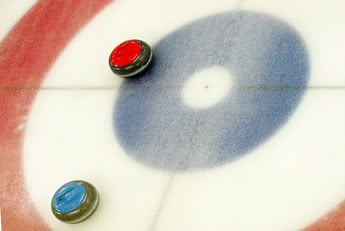
Curling is a wierd sport that nobody seems to care much about (this from someone who used to play Ultimate Frisbee). Comedian Linda Smith (who sadly died recently) best summed it up, as 'housework on ice'. A few years ago at the Winter Olympics in Salt Lake City, the British women's team - all Scots - made it to the final and wound up winning the Gold medal, narrowly beating that notoriously icy nation, Switzerland. It was huge up here - millions of people stayed up to watch the final, me included. Ahem. The captain Rhona Martin won with the last toss, or whatever it's called, and they became national heroes. Until the recent Olympics when they were rubbish, and suddenly everyone has forgotten about curling. Scottish kids no longer stop stuffing their faces to pick up the slidey stone and brush-thing - and that can only be a sad thing.

Statues
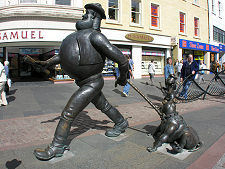
In other countries there are plenty of fading war heroes rusting on stone plinths. Not in Scotland (well, there are a few), here we have things like the staggering Scott Monument on Princes Street, the architect of which unfortunately fell into a canal and drowned before it was finished. A similarly tragic story surrounds the famous Greyfriars Bobby statue of a small dog who pined for his master for many years after his death (the master's, that is). There are also the many statues of William Wallace at Stirling, the much-defaced one of Donald Dewar in Glasgow, and cartoon character Desperate Dan in Dundee. The most infamous, though, is a statue few Scots could name, but most recognise - that of the Duke of Wellington in central Glasgow. For years, drinkers have shimmied up to plonk a traffic cone on his head - and this has now become a major Glaswegian landmark. But is the statue more important than the tradition? Scots say yes, the police say no (or aye and naw).

Diet
I covered the unique Scottish diet in a previous post, so I won't add much here - other than the fact that it deserves to be one of the Wonders of Scotland. Scottish kids drink more soft drinks than anywhere else in Europe (soda to my American readers). In fact, here people don't call it that either, it's usually referred to as 'Juice' - as in a 'can of juice', so maybe that's why so many kids drink it - they're just confused. Now even Primary school pupils are weighed when they start, to keep an eye on any porky ones. But it's not just kids - even the dogs are dangerously overweight here.

Smoke free public places
Again, I was talking about this only the other day - you can go anywhere in Scotland and not have other people's smoke bother you. Great for non-smokers like me, less good for smokers. But who cares about them, eh? ;)

The weather
The middle of April and it was snowing the other day. Today is gloriously sunny, last weekend it was blowing a gale. Tomorrow it will be raining. On Tuesday I stood outside Haymarket waiting for a bus, watching wave after wave of city-bound commuters sweep out of the station and promptly have their umbrellas inverted by the mini-tornado that was whipping towards Princes Street. Scotland even has it's own type of weather - Haar - which true to form is a dank mist that rolls meanly off the sea to spoil sunny days. 'Four seasons in one day' is a widely-used weather cliché, but up here you can modify that to 'Four seasons at once, every day'.

Beaches
Scotland has some of the best beaches in the world, it's just unfortunate that the weather here gives you about 3 viable beach days per year. I was on the beach last weekend, in fact, at Yellowcraigs on the way to North Berwick. It was brilliantly sunny, but blowing a gale - good news for kite flyers. Less good news for me, doing what I normally do on beaches - rooting about for shells and bits of dead animals to bore people to tears with. In my defence, winkles and suchlike are interesting, you just don't know it. It's been a tremendous week for the Scottish coast - not only did it cough up a decaying H5N1-ridden swan (now thought to have been washed here from Germany), but some beaches are slightly radioactive, others dangerously so. They also attract odd people (no jokes about winkles there).

Tunnocks Caramel Wafers
Enough said...

Monday, April 10, 2006

Seven Wonders of Scotland

The winner


The National Trust for Scotland and The Scotsman newspaper have recently concluded a poll of the 'Seven Wonders of Scotland'. Members of the public could vote for a shortlist of 30 things that make Scotland great, or suggest their own. Below are the top seven, with the link to where the other 23 on the shortlist fared (the Scottish Parliament building finished last). Some of these are well-deserved (I do love the Forth Bridge), some not-so (Scotland's light and sky???). But see what you think. I'm currently putting together my own Seven Wonders of Scotland - look out for it sometime later this week...


1. The Forth Bridge
When it was built, the Forth Bridge was regarded as the eighth wonder of the world and it remains one of the most recognisable structures in Scotland. Sir John Fowler and Benjamin Baker's bridge is a testament to robust Victorian engineering and casts a magnificent silhouette across the waters of the Forth.

2. Single malt whisky
The pure water, the clear fresh air and the peat moorlands of Scotland all contribute to the flavours of single malt whisky, the water of life and one of our great offerings to the world. The combination of water, malted barley and yeast result in hundreds of distinctive flavours, from the smoky island malts to the sweet ambrosia of Speyside.

3. Edinburgh Old and New Town
With a stunning natural setting and a magnificent skyline, Edinburgh is a treasury of architectural marvels, from the cobbled labyrinth of the old walled city to the elegant Georgian splendour of the New Town. Every step is paved with history, from the towering achievements of the Enlightenment to the heinous crimes of grave robbers Burke and Hare.

4. Glencoe
Towering mountains and ever-changing weather characterise the eerie glen, redolent of the ghosts of one of the most bloody episodes in Scottish history. Standing in the depths of the valley, one cannot fail to be overpowered by the landscape and the almost tangible presence of the past.

5. The Prehistoric treasures of Orkney
Within a few windy miles on Orkney is a collection of standing stones which predate Stonehenge and the Pyramids. Maeshowe, the Ring of Brodgar, Stenness and Skara Brae, which are all World Heritage Sites, are potent symbols of the culture which predated and helped create Scotland.

6. The Kilt
Not only is the kilt a national form of dress, which keeps alive the tradition of the clan tartan and identifies Scots at formal gatherings around the world, it is also a design classic. French designer Jean Paul Gaultier is a fan, Vivienne Westwood created a punk version and Howie Nicholsby of Edinburgh has made plain kilts in leather and denim for stars including Vin Diesel and Robbie Williams.

7. The light and sky of Scotland
From the vast skies of Orkney to the cool clear light of the east coast and the blazing pink and orange of the Hebridean sunsets, Scotland's skies present an ever-changing panorama. Writers, poets and artists from the land of mist and mountains have celebrated the transforming beauty and peculiar qualities of Scotland's light.


list in full

Thursday, April 06, 2006

Seeing from space


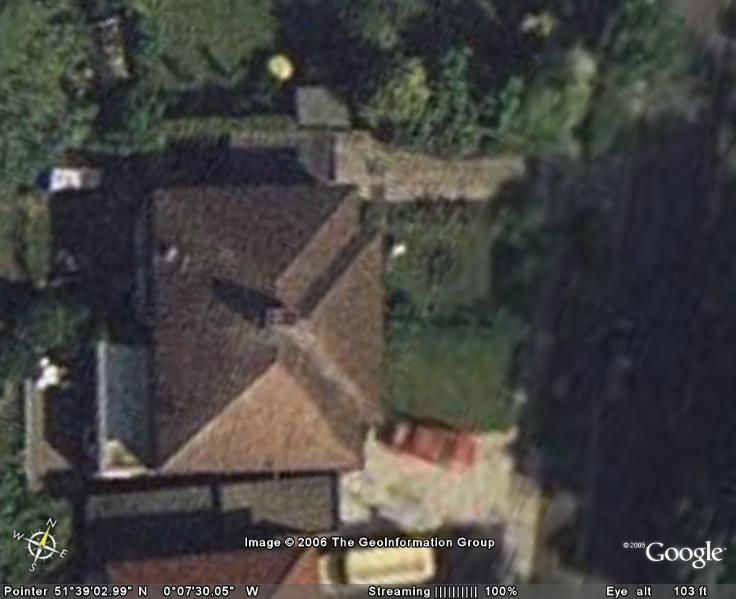
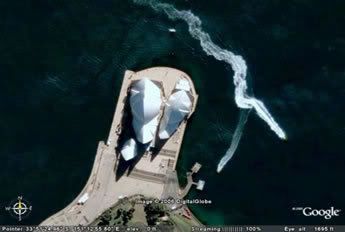
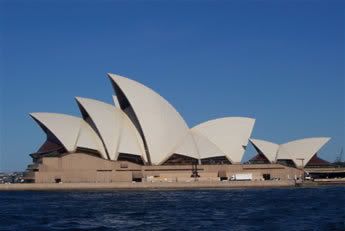
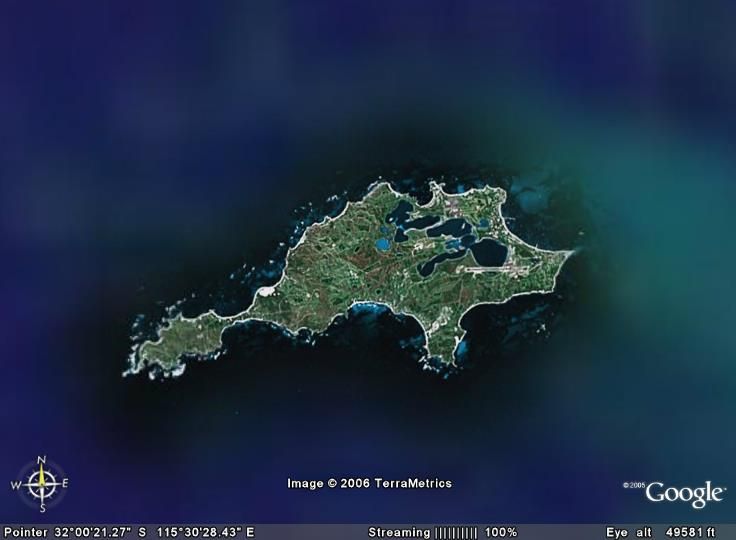
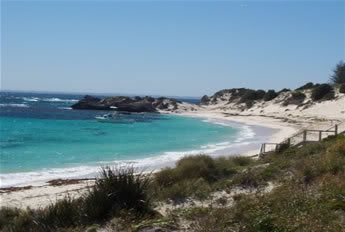
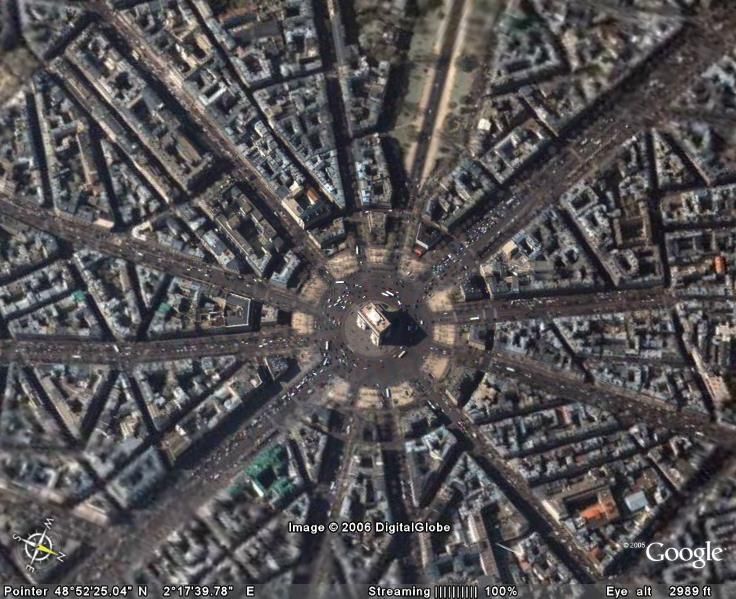
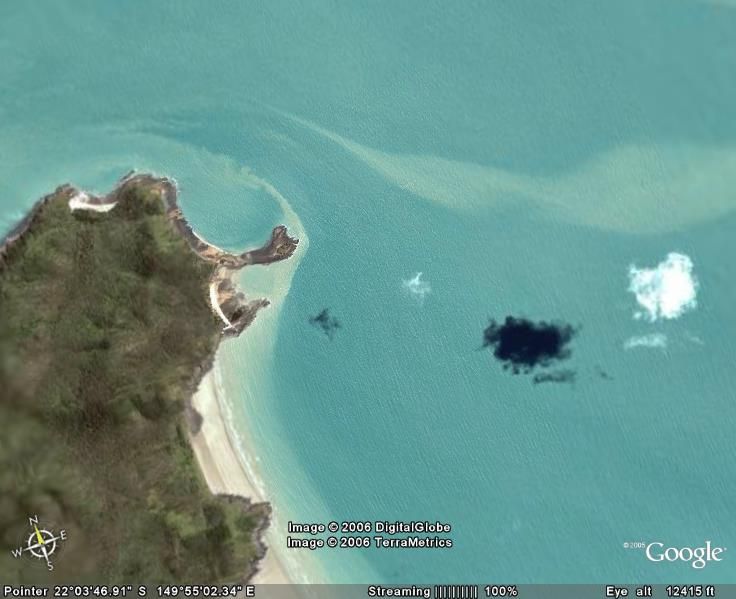
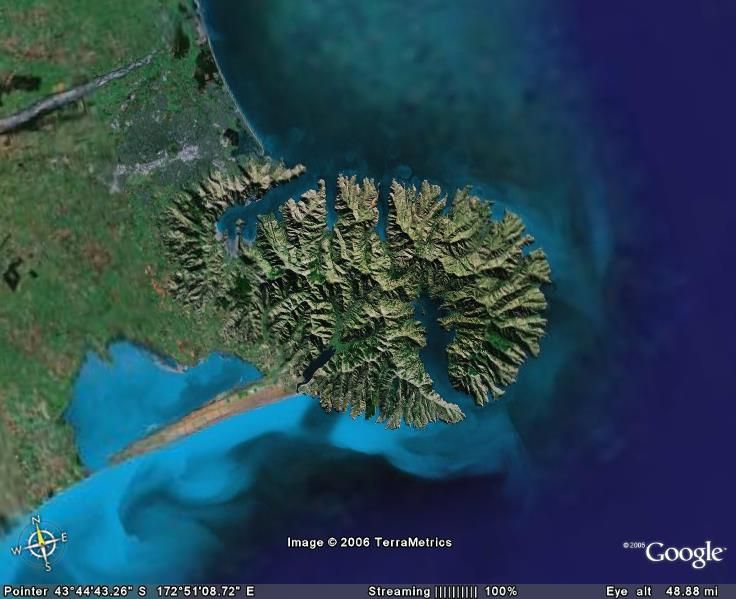
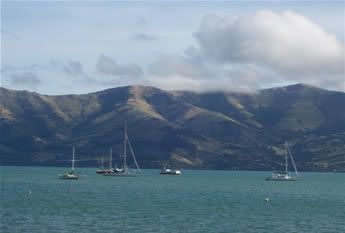
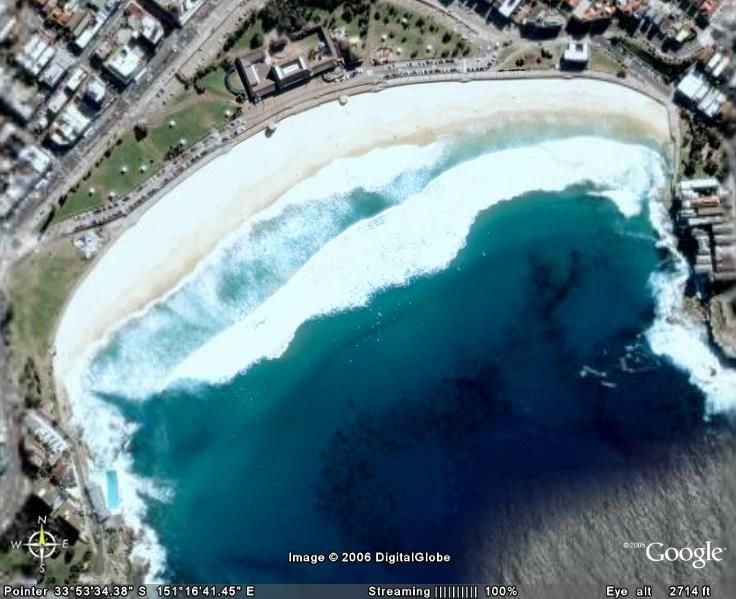
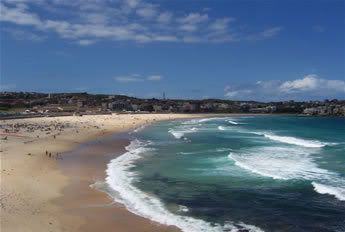
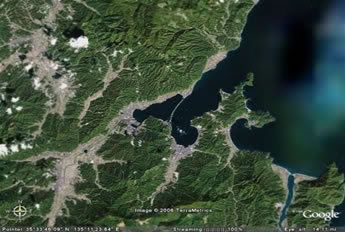
Google Earth is simply brilliant. You can search anywhere on the planet and find a satellite photograph of the area, and then zoom in so you can pick out individual parked cars and even people. Not all of the world is in the sharpest level of focus - just major population centres and landmarks, but it's still amazing. The above photo is my Grandad in his North London garden (the tiny white blob is his shirt). Even little green men can admire his flowering borders. Here are some more views of places from space, and my ground-based photo efforts underneath...


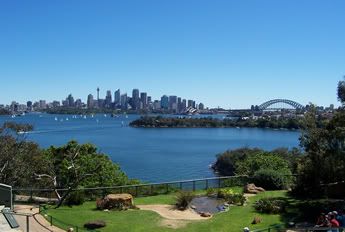
Sydney Opera House


Rottnest Island, WA


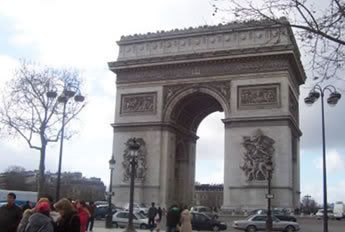
Arc de Triomphe, Paris


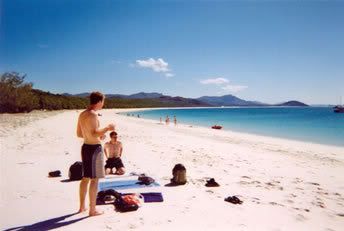
Whitsunday Islands, Queensland


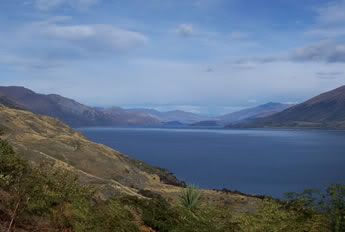
Banks Peninsula, South Island, NZ


Bondi Beach, Sydney


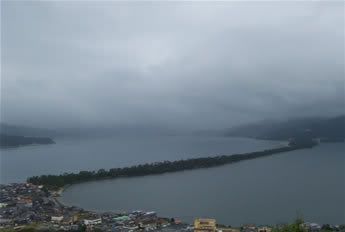
Amanohashidate, Japan


Google Earth can be downloaded free here.


Edit - Also for those of you with excess time - check out Google Sightseeing, a website (not affiliated to Google) that posts interesting and wierd things seen on Google Earth. Personal favourites include a 58ft long termite on a roof in Rhode Island, Thomas the Tank Engine at the Isle of Wight steam railway museum, and - proving that they had a lot of excess time - Googlesightseeing even managed to find a person flying a model aeroplane in a field in Essex. From space. Outstanding...

Tuesday, April 04, 2006

Bonus Louvre photos


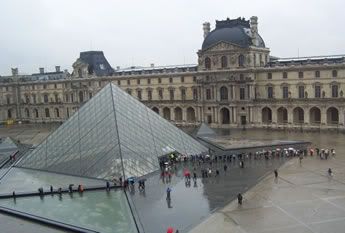
Punters queueing to get into the Louvre on a cold and wet Parisian Sunday. The glass pyramids were constructed in 1989 from a design by a Vietnamese architect, IM Pei. Just inside is an airport-style bag scanner, and a large elevator leading down into the main entrance hall. The old building in the background is one of the three wings of the museum - the Denon - which enclose the pyramid inside an ornate and statued courtyard.


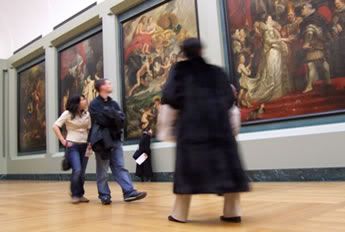
Grant and Lan struggle to take in the opulent scale of the Galerie Médicis - a single room containing over twenty mammoth canvases by Rubens. Each commissioned by Queen Marie de Médicis, they picture her being blessed by angels, moving armies of men to tears with her beauty, and receiving showers of gold from the heavens. She ruled France from 1605 to 1617, and was the mother of Louis XIII - who eventually overthrew the Italian nobles that were 'advising' her. She was twice sent into exile, and twice escaped, leading a revolt against her son before dying in Germany. I'm surprised Rubens stopped at two dozen.


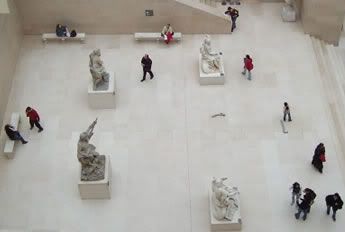
An overhead view of a selection of marble statues - the Louvre has one of the largest collections of Roman and Greek statues in the world. It's a pity many people rush past them on the way to the famous individual paintings, but they are rather samey. When you've seen one stone Italian nakedly pointing at something, you've seen them all.


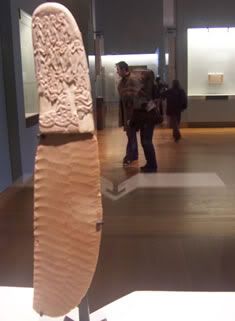
I had no idea the Louvre had stuff like this in it too - an incredibly detailed bone knife from one of the early Middle-Eastern civilisations. The handle is carved into a hippo tooth, which must have taken some extracting. The depictions are some kind of story, possibly involving Hippo dentistry.


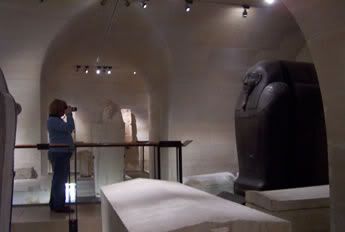
Photo time in the Egyptian Gallery. There are roomfuls of mummies and sarcophaguses (sarcophagi?) in the Museum, some of which must weigh an incredible amount. The first time I ever went to Edinburgh was on a school trip to see a Pharoah exhibition, when I was about ten. You couldn't take pictures inside, so we stood in the street taking photos of the guidebook. Because of the old disc camera I had, the lens and viewfinder were inches apart, and I ended up with blurry photos of the pavement.


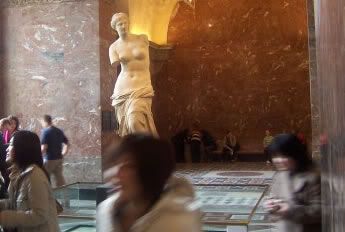
Japanese tourists rush past the Venus de Milo, trying to not get in the way of the picture. I've seen Michaelangelo's David in Florence, and the Venus de Milo is probably the other truly famous marble statue people eulogise over. It's impressive, too. She does have a rather blank expression on her face though, as if she's wondering where she put her arms.

Thursday, March 30, 2006

How to come to grief

Fancy them at your peril...


Part of my job involves coding types of cancer from medical reports, each one having it's own alphanumeric code. The book we use for this (which as you can imagine is very large, with each cancer and each body part having a specific code) also contains a chapter on 'External causes of Injury', full of things like being hit by cars, punched in the face etc. But it also contains some slightly less-common ways to come to grief. So with apologies to hypochondriacs everywhere, here are a few lesser-known ways to end up on a hospital admission form...


- accident caused by diving with insufficient air supply W81.0
- accident (transport) involving aircraft - sucked into jet engine V97.3
- assassination (attempt) (see also assault) Y09.0
- bean in nose W79.0
- beheading (by guillotine) legal execution Y35.5
- bitten by millipede, venomous (tropical) X26.0
- burn (electricity)(flame)(hot gas)(radiation)(steam) to testis T21.0
- combustion, spontaneous (see also ignition) X09.0
- contact with hornet(s) X23.0
- contact with meat slicer (industrial) W31.0
- dust in eye W44.0
- effects (adverse) of nuclear explosion (fireball) Y36.5
- falling from flagpole W13.0
- implantation of quills from porcupine W55.0
- lying before train, vehicle or other moving object (accidental) Y31.0
- mangled (accidentally) X59.0
- pecked by bird W64.0
- rowing, excessive X50.0
- spacecraft accident injuring occupant V95.4
- struck (accidentally) by law enforcement agent Y35.6
- suicide by steam, hot vapour X77.0
- thunderbolt X33.0
- twisted by person(s) (accidentally) W50.0


I love some of these. How on earth do you accidentally lie in front of a train? Or steam yourself to death? You'd lose none of your flavour though. Unsurprisingly, the book makes no allowance for any positive effects of being caught in a nuclear fireball (if there are any, they're probably only very brief). And all this assuming SMR06 medical forms survive the apocalypse - maybe cockroaches could fill them out, or something. Anyway, there are also 'medical' causes of illness and injury in there - not just unfortunate things that happen if you stand in the wrong place/push the wrong button/annoy a porcupine. Some of them have names you just couldn't make up - and would cause you no end of nervous fidgeting in a doctor's waiting room...


- bubbly lung sydrome P27.0
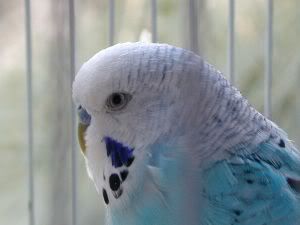
- budgerigar fancier's disease J67.2
(I kid you not)
- clam digger's itch B65.3
- coalminer's elbow M70.2
- devil's grip B33.0
- kinking hair L67.8
- moveable kidney N28.8
- overlapping toe M20.5
- testicular feminization syndrome E34.5
- whistling face Q87.0


and if it all gets too much...


- dropped dead R96.0

Monday, March 27, 2006

Lights Out

Take it outside...


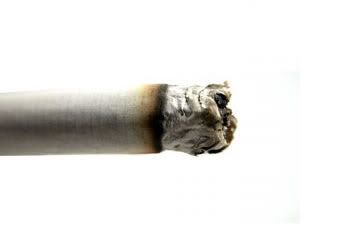
This weekend was an historic one for people living in Scotland, as it became the first part of Great Britain to ban smoking in all public places. It was heavily pushed by the Scottish Government - who are desperate to improve the health of a country with a life expectancy 10yrs below the EU average. Despite it being in the media almost continually over the past few weeks - with 20% of smokers prepared to flout the ban, authorities were somewhat relieved when the ban implementation passed off without a hitch.

At this point I should admit to having an interest here - if you don't know, I work as a Cancer researcher - so anything that helps keep people off my database is a good thing (especially on a Friday afternoon). Lung Cancer kills over 36,000 people in the UK each year* - 1/5 of all deaths - and in Scotland 35 people a day die from the effects.** Something needs to be done to reverse this, it's shameful.

But is banning smoking in enclosed public spaces the answer? I'm still not sure if it will persuade smokers to quit - I assume they'll just go outside or smoke more at home. I do know that as a non-smoker I used to hate the stinging eyes and stinking clothes that used to be the result of a night out - so for me, it has to be a good thing. The ban was brought in at 6am on Sunday - ironically on the day the clocks went forward and BST began. So not only did the discrimination of smokers start, they got an hour less in bed too. At least Gordon Brown didn't increase taxes on sausage suppers and Irn Bru.

By a co-incidence, I was in Boston on the day they went no-smoking, and remember plenty of signs encouraging people to smoke one last time 'Wave your butts in the air' is one that stands out. Sydney introduced a 'partial' ban, where bars and pubs had segregated smoking areas - so people who wanted to light up had to traipse to the other side of the bar. It was too piecemeal though, and some places didn't bother, others were totally no-smoking and the 'fag lepers' (as Viz calls them) had to stand outside - not much of a punishment given the Aussie weather.

Here though, it's a different story. You'll be pleased to hear I conducted some exhaustive research yesterday, and found many pubs now have benches and bins outside for smokers. A few more hopeful landlords had installed outdoor seating - but the freezing winds meant there was no Italian Piazza-style drinking on Rose Street, just hunched smokers puffing away in pub doorways. The website of Clearing the Air Scotland has the solution - a smoking shelter, that looks like something birds would use if they were waiting for a bus.

So in my opinion it's a great day for Scotland - fair enough it will annoy some smokers who I've heard complaining about being victimised, and the 'Nanny State'. But they've been victimising me and other non-smokers for years, so who cares. There's some fuss over it now - but soon not smoking in pubs will seem as everyday as not smoking at your desk (something people I work with can still remember). The aim isn't to stigmatise anybody - it's to help save lives and increase Scotland's health. The sooner it's introduced in England and Wales, the better...


[edit - it seems the ever-enterprising Scots have reacted to the ban in ingenious ways already. From the BBC...A man posing as a plain-clothes police officer ordered a woman who was smoking on a Glasgow train platform to pay a £20 on-the-spot fine for breaking the new Anti-smoking legislation. The lone passenger had been smoking a cigarette at Partick station at 1110 GMT on Tuesday when the man approached. He said he was a plain clothed police officer and gave her a fine. The victim handed over the money.

* [Cancer Research UK, 2002]
** [Health Education Authority]

Tuesday, March 21, 2006

The Wedding


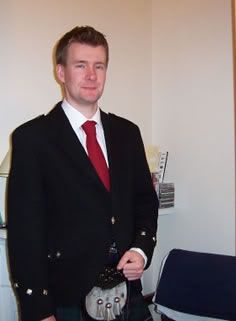
So this is your author all dressed up in the kilt and ready to go. Over the course of the day I perfected this catalogue pose - kilts have no pockets - so you need to hang onto something (no tittering at the back!). Felt great though - when I was walking through the city people were standing aside for me (true story), such is the respect of the Man in Highland Dress. Makes a change from pointing and throwing things, anyway. It's a heavy outfit though - even the tie is 100% wool. And to answer the question you're thinking of - 'nothing'.


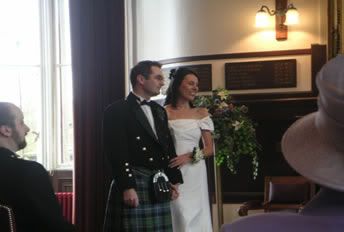
The happy couple becoming officially a happy couple, at the City Chambers in Dunfermline, Fife. Despite the gloomy weather, it was dry - albeit windy (an interesting sensation in a kilt). The registry office service was well done, and Michele got most of the way through her vows without blubbing. I was wringing out my hanky at that point...


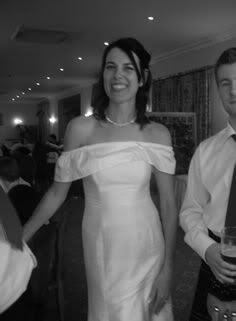
I look like I'm trying to steal the Bride's big moment here - you can see Paul on the left leaning back out of the way (mostly). The reception was at a 4-star country hotel over the road from Dunfermline FC's stadium - and very nice it was too. Good food, plenty of booze, and a chance to catch up with people who had come from all over the country (and abroad). I should have elbowed my way in a bit more, though... ;)


It's actually against the law to get married in Scotland and not have a Ceilidh afterwards. A cheefully miked-up sergeant-major type was in charge of getting people up and explaining what to do. I'd been to one before, but everything was tough at first. The Scots actually learn Country Dancing at school, whereas we just used to play Top Trumps and swap football stickers. But after a while I picked up each dance - and then it promptly stopped and another one began of even more baffling complexity.


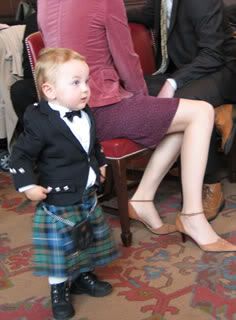
Despite all of us properly dressed up - only one man got the attention on the big day. Outshining even Edd the Groom (formerly Edd the Drummer) was his son Jack, here looking tip-top in his wee kilt. He spent the rest of the ceremony trying to run into the (empty) fireplace, and being restrained by the Best Man. Without doubt Jack ended up being photographed more than the happy couple - but of course nobody minded, least of all Jack.

Friday, March 17, 2006

Tartan-tastic

Taylor Tartan


Although I've lived in Scotland for a whopping 12 years, I've never worn a kilt. I'd never had any reason to - the one wedding I was invited to where Scottish formal dress was required I couldn't attend (I had another wedding on the same day in Wales). But this weekend two of my friends are tying the knot, Scots-style, so yours truly is donning the Tartan for the first time. They've come all the way from New Zealand - so you've got to make an effort, I guess. This was me visiting them in Wellington (I'm on the left).

So accompanied by my Scottish mate Grant - at least one of us knew what he was doing - we walked through flurries of soapy snow to Princes Street. One of the many twee Scottish shops there is Cameron Ross, which is all Tartan rugs and toy Highland Cows (or Hee-land Coos as they are pronounced) on the ground floor. Elbowing the tourists out of the way, we went up the stairs and asked to hire a kilt. We were then shown up a winding staircase, and through a series of doors, to the top of the building. On the way we passed stockpiles of shortbread, photos of Scottish views, and a battered hoover.

In the kilting room, a young girl took us through the stages - although Grant had hired one previously so it was just yours truly who got the attention. I was measured as high round my waist as old men wear their trousers, and down to the knee whilst my legs were bent slightly. She then picked out a couple of kilts in my size. You only have a choice of a few generic tartans - so as Grant had gone for the Black Watch, I went for the other one, Scottish National. Sean Connery would be proud. I then had to try it on, which involved wrapping it round like a towel and buckling it in place. Amazingly it didn't fall off - but I hadn't done it tight enough. "Although you need to be able to breathe" said the girl, cheerily.

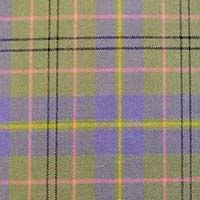
I was measured for a jacket and shoes - which involved a complicated method of tying I won't go into here, and was given socks and a 'Full Highland Accessory Pack' - which consists of a Sporran, Belt, Skean Dhu, Hose, Flashes and Kilt Pin. The Skean Dhu is the dagger you tuck into the top of your sock - but what with Scotland leading the world in knifings (Hello Glasgow!), it was plastic. I jokingly asked the girl if there was a Taylor tartan - and she replied that there was, which was news to me. So after we'd gone downstairs I searched the touristy shop for proof, and did indeed find it. As Grant said - "It's worryingly lime-greeny". And purple. You'd think a popular surname would have a decent colour-scheme, at least...

Tuesday, March 14, 2006

Walking near water

Kingfisher


When I leave the office at night, I have a number of choices when it comes to getting home. Getting a bus is the most obvious, as Edinburgh is well served by Lothian Buses - almost too well served in fact, as the maroon and white double deckers clog up the city centre on most days. When our office was relocated from the other side of Edinburgh two years ago (against the wishes of most of the staff), the Union got the management to lay on free buses for staff back into the city - a small victory for us faceless drones. So I often get that bus, saving £1 each trip. Of course, as regular DUaB readers will know, walking home is my favoured method.

The last long-distance walk home I had was on my daily sun-drenched stroll along the Sydney Harbour bridge and through Hyde Park. Very different now that I'm back here (temperature in Sydney yesterday 27C; Edinburgh 1C), but having moved into the new flat I at least get a different route from my old Edinburgh hour-and-a-half trek through slate-grey housing estates. Admittedly, the first hour of the new trek home is along the traffic-clogged Corstorphine Road, but once I get past Edinburgh Zoo it improves a bit.

Here they used to walk the zoo's penguins along the street - presumably to give them a bit of exercise, and to attract visitors - but the sheer bizarre sight of a line of Rockhoppers waddling along a main road lead to a number of accidents, so the practice was halted. Accidents involving distracted drivers, I should say, not penguin casualties. But when I walk past the zoo it's a short waddle to Murrayfield, and the scaffold-esque shadow of the rugby stadium is where I can turn off the main road and leave the buses and cars behind.

The final 45mins of the trip home is two miles along the Water of Leith footpath - a paved route that follows the small river flowing through Northern Edinburgh. Running from Balerno in the Pentland Hills to the mouth at Leith, the 12 miles of the river has a path all the way (I've walked it in the past). In my opinion, it's one of the secret joys of the entire city - very few people know about it other than those who live nearby and use it as a shortcut, or to walk their dogs. Tourists rarely find it.

The path is so quiet, you can only hear the water and the birds - forgetting totally that you're walking through the middle of a capital city. The river valley is sunken slightly, so it swallows sound, and the droning of traffic is only faint at worst. The path undulates, taking in rapids, weirs and dams, and at the moment the wooded hillsides are covered in crocuses and snowdrops. The first time I went home that way, I saw a Dipper hopping on a rock amidst the rushing water, and the second time, a Kingfisher blurred past me in a streak of blue. That was only the second time I've seen one in my entire life.

So I'll be walking along the path every day, if possible. Just this weekend we had over an inch of snow (gasp), so I took a few wintry pictures. If you're visiting Edinburgh and have a spare couple of hours - walk down Dundas Street to Canonmills (or take the 23 bus), then follow the signs for the Water of Leith footpath to Stockbridge. The walk takes you along the best sections of the route, and you can get a bus back from Murrayfield to the city. If you pass me, give me a wave...


More information on the Water of Leith can be found here.

Thursday, March 09, 2006

Bonus Paris photos


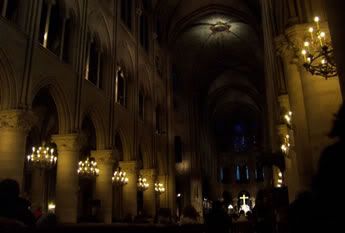
Notre Dame Cathedral is staggering in scale. The outside facade looms over you, in an extravagantly carved H-shape covered with life-sized statues of people ascending to heaven or being cast into hell. When you step through the creaking heavy doors everything goes black. Once your eyes adjust to the gloomy interior, this is what you see - arches stretching upwards out of sight, glowing candles, and in the distance a dazzling golden crucifix.


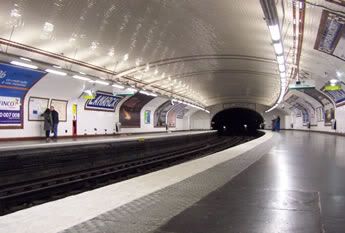
The Paris Metro is great - you can rattle around anywhere under the city for next to nothing. It's everything a city Metro should be - frequent, busy, dirty, cheerful. Many stations have buskers playing accordions or pianos. After the smooth, sanitised Tokyo Metro, it was good to travel about in Paris as you really feel you're underneath a massive city. This is Lamarck-Caulancourt Station, in Montmartre. Grant and Lan are there, looking at the map.


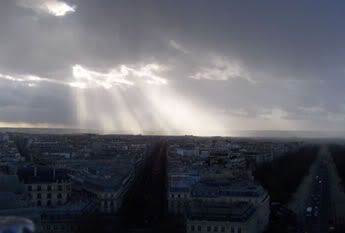
Greyness from the top of the Arc de Triomphe. There's a fantastic view from the top - identical-looking grey wedges of buildings stretching off in every direction, almost as far as the eye can see. Large wide boulevards run out like spokes on a wheel, clogged with traffic. We just dodged a rainstorm, and here the sun had started to weakly pierce the clouds and shine over the city again.


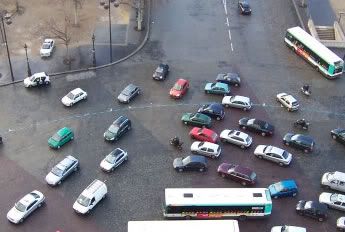
The other fun thing to do atop the Arc de Triomphe is to watch the traffic swooping round the Place Charles de Gaulle Etoile in un-coordinated mayhem. Somehow they seem to avoid eachother, although on many occasions it was a close-run thing. With no traffic markings, the cars, vans and bikes pile around until something blocks their path, then toot their horn until a space opens up and they can make a dart for it. It's almost mesmerising.


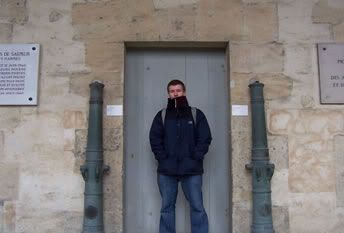
This is your author at the Musee de l'Armee at Les Invalides, essentially the French War Museum. Unfortunately, half of it was closed for renovation - but they did have a lot of cannons outdoors. If you're wondering why I'm wrapped up, it was below zero. I've been to Paris four or five times now - and always in winter when it's freezing. Next time, I'm going in summer...

Sunday, March 05, 2006

Solutions to a problem

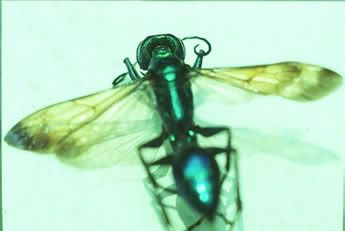
Ampulex compressa


A while ago I did a 'serious' post about discovering the backstory to a beach I ate a sandwich on in Western Australia (here). Time for another one, this one prompted by a science article I read in another blog - the excellent, and award-winning Loom. You might not want to eat whilst reading this, as it's about insects.

They have always fascinated me, and the recent BBC Natural History series Life in the Undergrowth proved yet again how incredibly they behave. The other week I also saw a programme about Butcher Ants in Africa - the marauding wave of tiny killers that rampage along, shredding anything hapless enough to get in their way. I'm not about to get drawn into the Evolution/Intelligent Design argument here - as most people who know me know I'm firmly on Darwin's side of the fence (throwing a frisbee around in his garden, probably). But I can understand how some animal behaviour is seen by Creationists as proof that evolution couldn't come up with something as complex. The two examples below could be seen as being so utterly complicated they couldn't possibly develop over time. But I think they are the opposite - evolution in action.

The first belongs to the Butcher Ants, and for me is pretty much cast-iron proof that evolution happens. When the stream of ants encounters a creature that can't escape, they swarm all over it and nibble it to pieces. On the programme they found a slug - easy pickings, you might think. Well, no, as the slug immediately splurged slime all over the place, drowning any ants nearby, and giving it a private moat. If this had saved the slug in the past, the ants have now discovered - learned - a way around it. Incredibly, each ant goes away and picks up a jawful of earth. As the smug slug sits in his pool of gunge, each individual ant drops it's soil into the slime. What are they doing? They are soaking up the liquid. Eventually, so many ants have done this, the mucus puddle has dried up and the ants swarm all over the now hapless slug, tearing it to pieces. This is evolution happening in front of us. The slugs have developed a protective measure against the ants, and the ants have learned a way around it. Now the slugs that change their behaviour to win back the advantage (by producing fiery slime, or something) will survive, and those that can't, won't. This is Natural Selection in action.

The second incidence stunned even me - and when it comes to invertebrates, I take some stunning. Unless it involves large spiders. This one involves a wasp - Ampulex compressa, which has to lay eggs inside a cockroach (I did warn you). Now if it stabbed a healthy living roach, and let it run off until the egg hatched, the host might die or get eaten - killing the wasp larvae at the same time. So the wasp has to incapacitate the cockroach, and hide it away. Some parasitic wasps sting their victim and drag it bodily back to the wasp's burrow - but Ampulex is too small, so has to do things a little differently. It prefers to get the cockroach back to it's own burrow - but of course they wouldn't exactly volunteer. So what the wasp does is astonishing. It stings the roach to stun it, then stings it again in the back of the head. Not just anywhere - it probes around exactly, until it finds the specific part of the roach brain covering escape reflexes.

Driving it's stinger home, the wasp removes the 'fear' part of the brain (for want of a better expression), and disables the insect so it can't walk unaided. The cockroach sits there obediently. So how does the wasp get to the burrow? It grabs hold of the roach's antennae and walks it there, like a dog. The roach follows, walking to it's home, and the wasp pulls it gently along, but lets it instinctively go home. There, the wasp stings it again, injects the egg, and walls the hole closed. The larvae then has a safe, protected place to develop, and a first meal on hand. In fact, the baby wasp is born inside it's first meal - like being born inside a giant pie. So the Ampulex wasp has overcome the problem of being too small to manipulate a massive cockroach by evolving the means to make the cockroach manipulate itself like a zombie.

Just think about the changes in behaviour necessary to give the wasp that ability. Discovering where to sting the roach without killing it, what part of the brain to aim for to make it subserviant, even what species of cockroach to prey on. Survival of the fittest. And this isn't a complex mammalian brain making these decisions - this is a wasp half the size of your little finger. The one downside of evolution, is that it happens so sloooooowly we can't see all these variations, all the tiny steps taken for the behaviour to develop. But I think we can see enough. Each stage of the battles between ant and slug, wasp and cockroach is part of this development. Now the ants and wasps have the upper hand - but if the cockroach develops a thicker head, the wasp's stinger might not reach. This would be the next stage. This is evolution in action - and I find it utterly, utterly fascinating.


For more about Ampulex compressa, the excellent article can be read here. It also has photos of the wasp stinging the cockroach.
Wednesday, March 01, 2006

Pancake Day

It's all in the wrist


It was a great week in Paris, but now I'm back in Edinburgh and back at work. While I was away the final bits of organisation and monetary matters were concluded, and a couple of days after I got back I moved into a new flat. It's a really good feeling to get a place after so much time spent looking, and I moved in over the weekend. The first few days in a new flat are always slightly strange - the oddness of waking up and not realising where you are, having to work out a new storage system for your pants, etc. The novelty hasn't worn off yet.
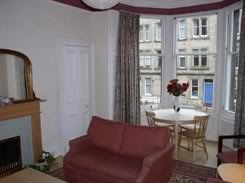
It's a traditional Edinburgh tenament building, all high ceilings and cornices. The ceiling of the living room is a stunning dark purple, and the newly-laid click-together wooden floor is still slippy if you walk about in socks (as I found out the other day). The lounge has an 'Edinburgh Press' - a door with shelves behind it. By some unfortunate irony the stairwell light shines through the window over our front door, then through a window above my bed into my room. It had developed a maddening on-off-on-off blinking, so as I was lying there the first night I felt like an enemy combatant being prepped for interrogation. The next day a few bits of cardboard taped to the window, and it was all the better.

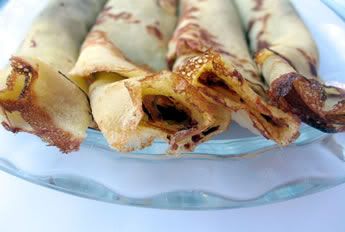
We celebrated the new flat in traditional last-Tuesday-in-February fashion, by having pancakes. There can be few foods that have a better easiness of preparation:great taste ratio (apart from handing a fiver to a chipshop proprieter). Blobbing the batter into a sizzling pan and quickly swirling it around becomes automatic after a while, and the pile of freshly-made pancakes soon builds up - only to reduce again almost as quickly. There was a certain irony as we watched 'You are what you eat' whilst stuffing our faces with pancakes. But our new IKEA coffee table looked great with all the fillings on it - honey, sugar, lemon juice, maple syrup, chocolate sauce, strawberry syrup, bananas, apples in caramel sauce, and two types of ice cream. You are what you eat indeed...

The lounge, with 'Press'